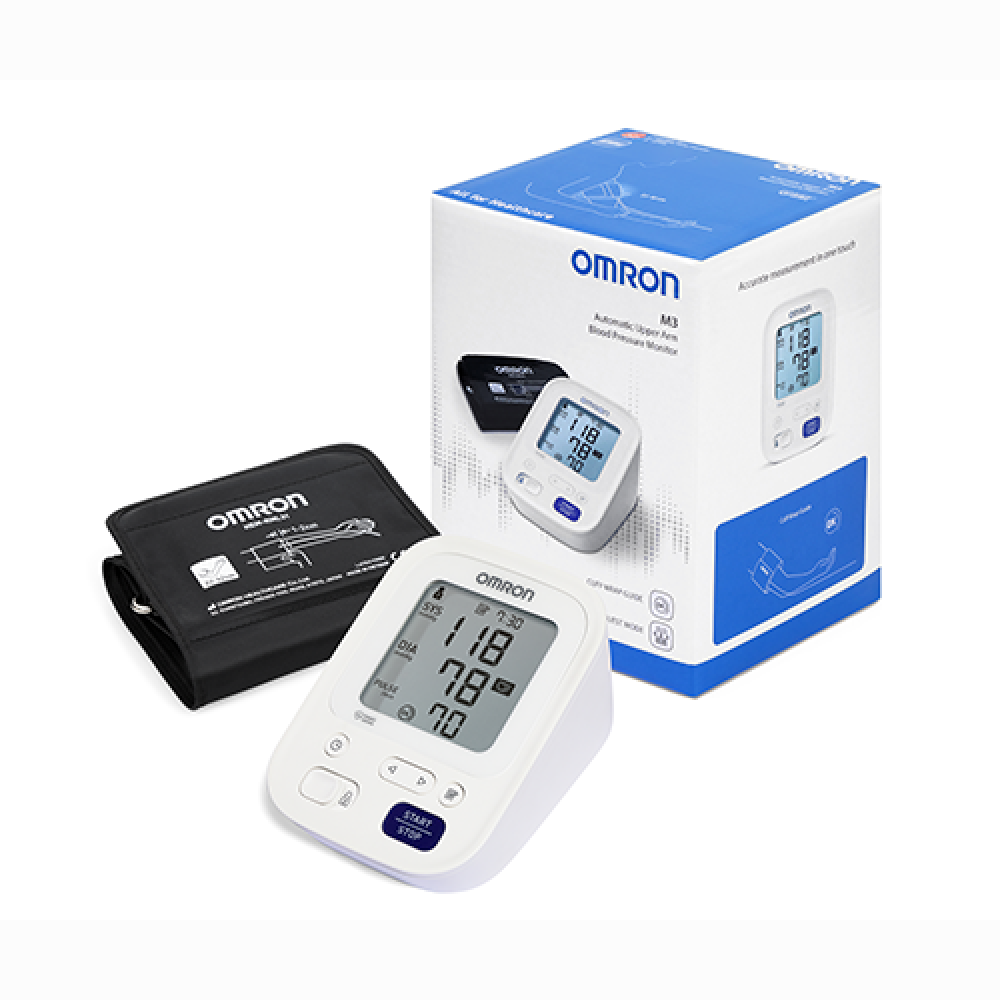
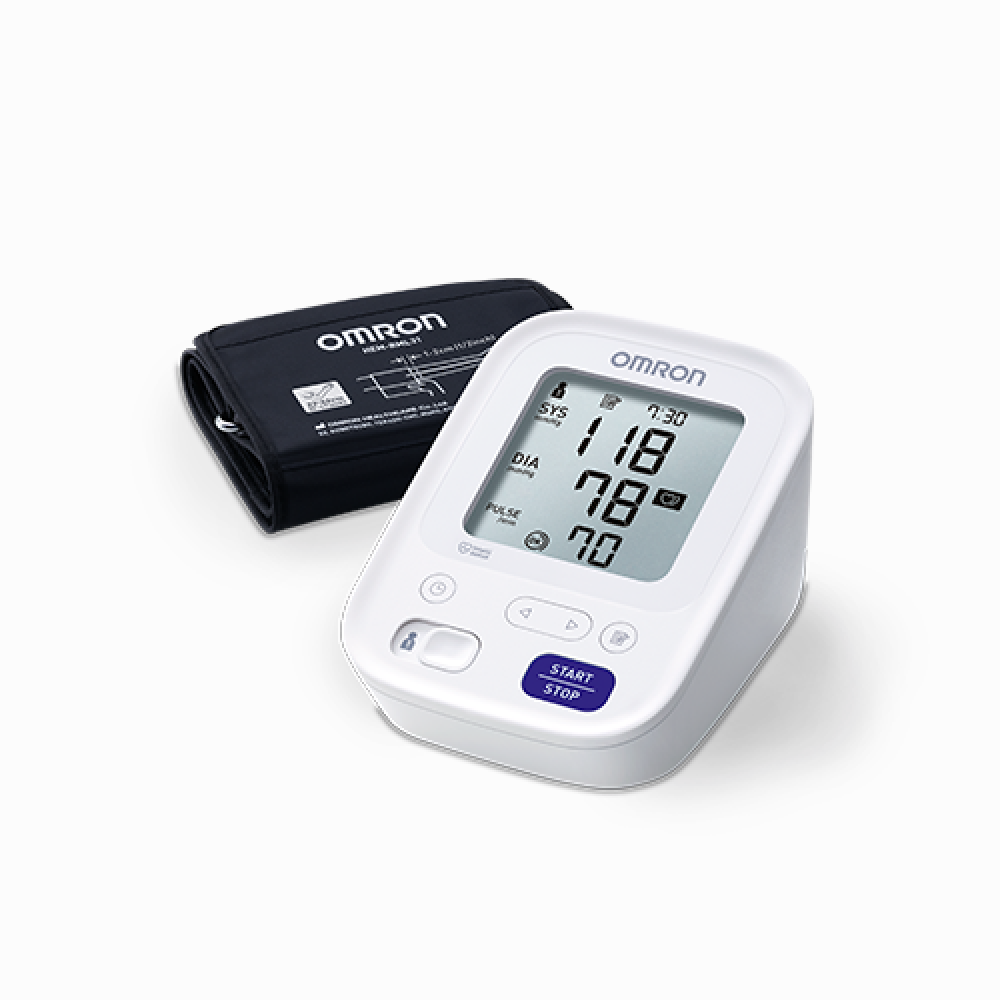
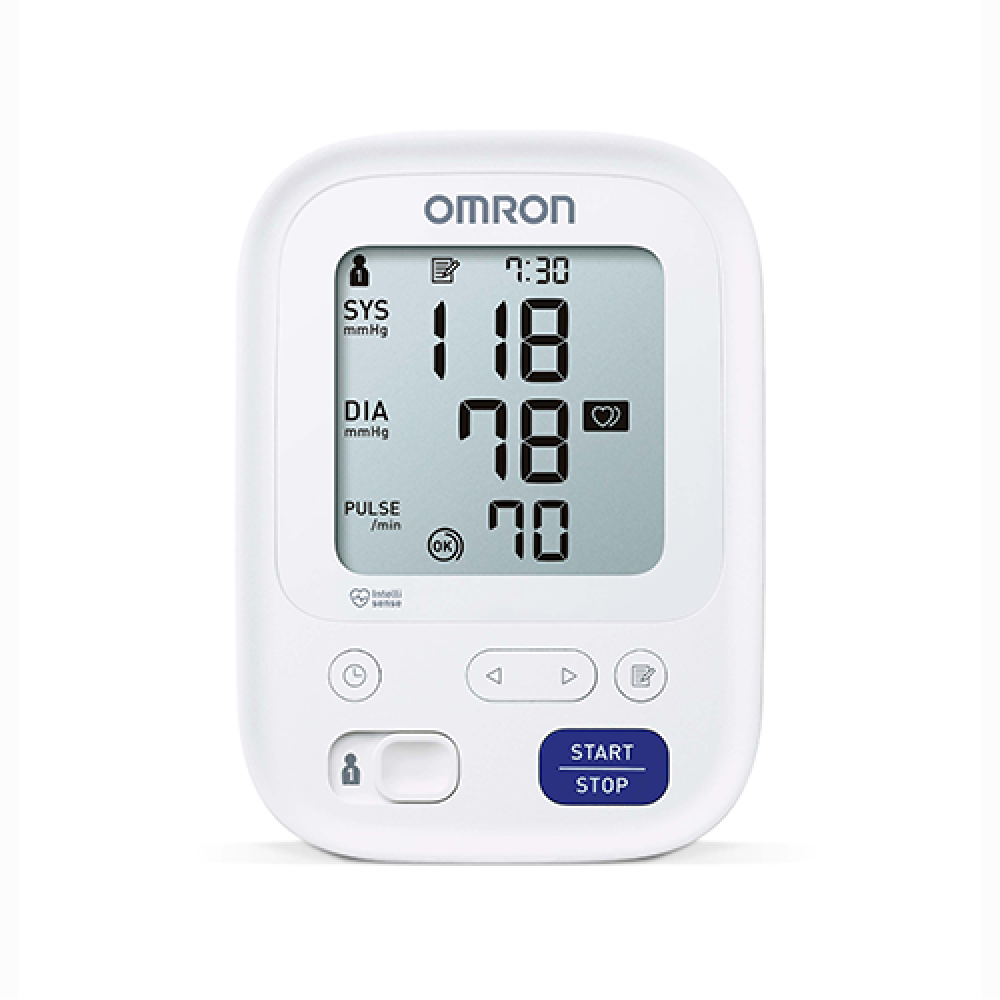
Omron M3 Blood Pressure Monitor
The omron m3 blood pressure monitor is designed for effortless use while delivering precise, repeatable readings. Featuring IntelliSense™ technology and a pre-formed cuff design, you can rely on accurate results regardless of cuff placement on your upper arm.
Key Features of Omron M3
- IntelliSense™ Technology: Provides a comfortable measurement experience without over-tightening or excessive loosening of the cuff.
-
The omron m3 alerts you if your readings exceed recommended levels, helping you stay informed about your cardiovascular health.
-
Detects irregular heartbeats during routine blood pressure measurements for comprehensive monitoring.
-
The omron m3 notifies you of excessive body movement during measurement to ensure accurate readings every time.
-
Built-in cuff wrap guide indicator confirms proper cuff positioning for reliable results.
-
Stores blood pressure data for two different users, with capacity for 60 readings per person, plus a guest mode for temporary use.
Advanced Design for Precision and Comfort
- The omron m3 combines ergonomic design with clinical accuracy. IntelliSense™ technology ensures a seamless, comfortable measurement experience.
-
The device includes a visual cuff-wrapping guide, a body movement detector, and an irregular heartbeat sensor. Clinically validated for accuracy, it features memory storage to track your readings over time and monitor trends in your blood pressure health.
What's Included in the Omron M3 Package
-
Blood pressure monitor unit.
- Medium-sized pre-formed cuff (fits arms 22-32 cm).
- Quick start guide instruction booklet.
- Storage case for portability and protection.
-
Blood pressure tracking log sheet.
Additional Benefits of Omron M3
- Helps you instantly recognize whether your blood pressure reading falls within the normal range.
- Provides everything needed for convenient, comfortable home blood pressure monitoring.
- Enables separate storage of readings for each user, with memory capacity for 60 measurements per person.
Instructions for Accurate Blood Pressure Measurement with Omron M3
To obtain precise results when measuring blood pressure, follow these essential steps:
Preparation Before Measurement
- Avoid physical exercise for at least 30 minutes prior to measurement.
- Refrain from consuming caffeine-containing beverages or smoking for half an hour before measuring.
- Ensure your bladder is empty before beginning the measurement process.
- Rest quietly for at least 5 minutes before starting.
Correct Body Positioning
- Sit upright in a chair with your back supported against the chair back.
- Place both feet flat on the floor and avoid crossing your legs.
- Remove any tight clothing from the area where the cuff will be placed.
Relaxation and Calm Environment
- Do not speak during the measurement or rest period.
- Sit quietly and keep your arm and hand relaxed on a table at heart level.
Device Setup
- Place the cuff on your upper arm, ensuring there is enough space to fit two fingers between the cuff and your arm.
- Confirm that the air tube extends toward the center of your palm or slightly to the right.
Starting the Measurement
- Press the power button on the device, then press the start button.
- You will feel the cuff inflate around your arm quickly; this may feel temporarily uncomfortable but lasts only briefly.
- If you experience significant pain or discomfort, you can deflate the cuff immediately by pressing the "Stop" button.
Recording Your Results
- Immediately after receiving the reading, write it down in your log.
- If the device has internal memory, verify that the reading has been saved correctly.
Verifying Accuracy
- After a few minutes, it is advisable to repeat the measurement to confirm reading accuracy.
- Take at least two measurements, with a two-minute interval between each, then calculate the average for a more reliable result.
Ongoing Monitoring
- If your doctor or pharmacist has recommended blood pressure monitoring, measure twice daily: once in the morning and once in the evening.
- Schedule regular appointments with your healthcare provider to review results and discuss any significant changes in your blood pressure patterns.
Understanding High Blood Pressure
- High blood pressure (hypertension) is a common condition where the force of blood against artery walls is consistently too high, potentially leading to long-term health problems such as heart disease.
- Proper blood pressure management can significantly reduce the risk of cardiovascular complications, including stroke and heart attack.
Practical Tips for Lowering Blood Pressure
To help reduce blood pressure levels, consider implementing these evidence-based recommendations:
- Losing excess weight can effectively lower blood pressure; monitor your waist circumference as part of weight management.
- Regular physical activity helps reduce blood pressure and promotes overall cardiovascular health.
- Consume a diet rich in fruits, vegetables, and whole grains while limiting foods high in sodium.
- Reduce salt intake in your diet, as lowering sodium consumption can contribute to decreased blood pressure.
- Smoking elevates blood pressure and damages blood vessels; quitting provides immediate and long-term benefits.
- Some individuals are more sensitive to caffeine, which may temporarily increase blood pressure.
- Chronic stress and psychological tension can raise blood pressure; practice stress-management techniques and allocate time for relaxation.
- Use home blood pressure monitors like the omron m3 to regularly track your pressure levels and share data with your healthcare provider.
- Some studies suggest that supplements rich in garlic or omega-3 fatty acids may support healthy blood pressure levels.
- Continuous blood pressure monitoring under medical supervision is essential for effective management.
Normal Blood Pressure Ranges
- Normal: Less than 120/80 mmHg.
- Elevated (Pre-hypertension): Systolic 120-129 mmHg and Diastolic less than 80 mmHg.
- Hypertension Stage 1: Systolic 130-139 mmHg or Diastolic 80-89 mmHg.
- Hypertension Stage 2: Systolic 140/90 mmHg or higher.
- Hypertensive Crisis: A medical emergency requiring immediate hospital attention if blood pressure reaches 180/120 mmHg or higher.